Is Europe Ready for War? Why Brussels Is Racing Against Time
Europe is facing a question it has spent decades trying to avoid.
After Russia’s full-scale invasion of Ukraine, rising pressure from the United States, and increasingly blunt warnings from military leaders, the European Union is being forced to confront a reality that once seemed unthinkable: its own defence readiness.
For years, Europe relied on diplomacy, economic integration, and transatlantic security guarantees to maintain stability. Today, that confidence is fading. With the war in Ukraine showing no clear end, trust eroding between allies, and warnings of future escalation growing louder, the EU is moving—quickly—to shore up its military, industrial, and strategic foundations.
The stakes are high. This is no longer just about supporting Ukraine. It is about whether Europe can protect itself.
A Continent Under Pressure

The sense of urgency did not emerge overnight.
Russia’s invasion of Ukraine shattered long-standing assumptions about security on the European continent. At the same time, political signals from Washington have grown increasingly clear: Europe must take greater responsibility for its own defence.
European leaders now find themselves caught between two imperatives—deterring future aggression while maintaining unity at home.
EU leaders agreed last December on a new €90 billion loan package to support Ukraine. Meanwhile, European Commission President Ursula von der Leyen announced a series of defence initiatives aimed at strengthening Europe’s deterrence capacity by 2030.
These moves come amid stark rhetoric. On 2 December, Vladimir Putin stated that Russia was prepared to fight if necessary and warned there would be “no one left to negotiate with.”
Around the same time, NATO Secretary General Mark Rutte issued a blunt assessment: “We are Russia’s next target.” He warned that an attack on NATO territory could occur within the next five years.
Germany’s defence minister Boris Pistorius echoed these concerns, stating that Europe may have already experienced its “last summer of peace.”
The message from Europe’s security establishment is increasingly consistent: the risk is no longer theoretical.
Are Europeans Personally Ready for War?
Despite rising political urgency, public readiness tells a different story.
A recent Euronews poll asked a direct question: Would you fight for the EU’s borders?
Of nearly 10,000 respondents, 75% said no. Only 19% said they would be willing to fight, while 8% were unsure.
These results highlight a growing gap between government planning and public sentiment.
Additional surveys show that concern about Russian aggression is highest in countries closest to Russia. According to a YouGov poll, Russian military pressure is seen as one of the top threats by:
-
51% of respondents in Poland
-
57% in Lithuania
-
62% in Denmark
Across Europe, “armed conflict” now ranks among the top public concerns, alongside economic instability and energy security.
Why Eastern Europe Is Leading the Response
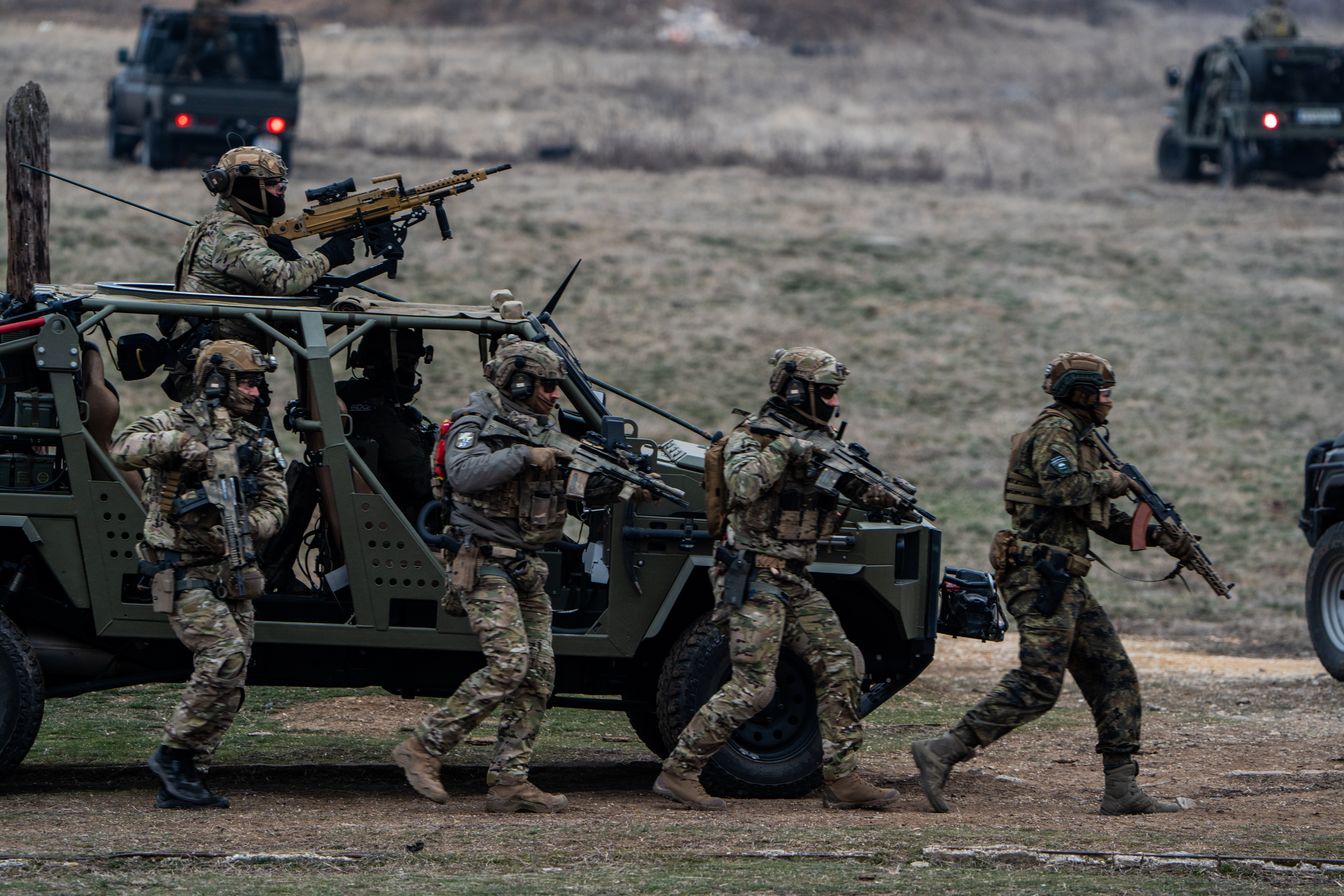
While EU leaders broadly agree on the threat, action has been most decisive in Europe’s east.
Countries such as Lithuania, Latvia, Estonia, Poland, Finland, and Sweden have taken visible steps to prepare their populations—both practically and psychologically.
Lithuania has begun developing so-called “drone walls” along its borders, while working with Latvia to restore wetlands as natural defensive barriers. National awareness campaigns, resilience exercises, and public drills are now common.
Lithuania’s Interior Ministry distributed shelter maps and emergency hotline information. Latvia introduced mandatory national defence education in schools.
Poland built physical barriers along its border with Belarus and expanded security education programs. Some secondary schools now include firearm safety instruction for teenagers.
Finland, Estonia, and Sweden have revived Cold War–era practices by publishing civil defence guides explaining how to respond during crises, power outages, or evacuations. Sweden even mailed updated “If Crisis or War Comes” brochures to every household in 2025.
Search data reflects rising concern. In countries closest to Russia, online searches such as “where is my nearest shelter?” and “what to pack for evacuation?” have surged—particularly in 2025.
What Brussels Is Doing Behind the Scenes
National governments are not acting alone.
At the EU level, Brussels has launched what may be the most ambitious defence coordination effort in its history.
European defence spending surpassed €300 billion in 2024. Under the proposed 2028–2034 EU budget, an additional €131 billion has been earmarked for aerospace and defence—five times more than in the previous budget cycle.
At the heart of the strategy is Readiness 2030, a roadmap endorsed by all 27 member states.
Its goals are practical and urgent:
-
Enable troop and equipment movement across EU borders within three days in peacetime
-
Reduce that to six hours during emergencies
-
Eliminate bureaucratic delays through a “Military Schengen” system
To achieve this, the EU is identifying and upgrading around 500 critical infrastructure points, including bridges, tunnels, ports, and railways capable of supporting heavy military equipment.
The estimated cost ranges between €70 and €100 billion, funded through a mix of national budgets and EU programs such as the Connecting Europe Facility.
ReArm Europe: The Financial Engine Behind the Push
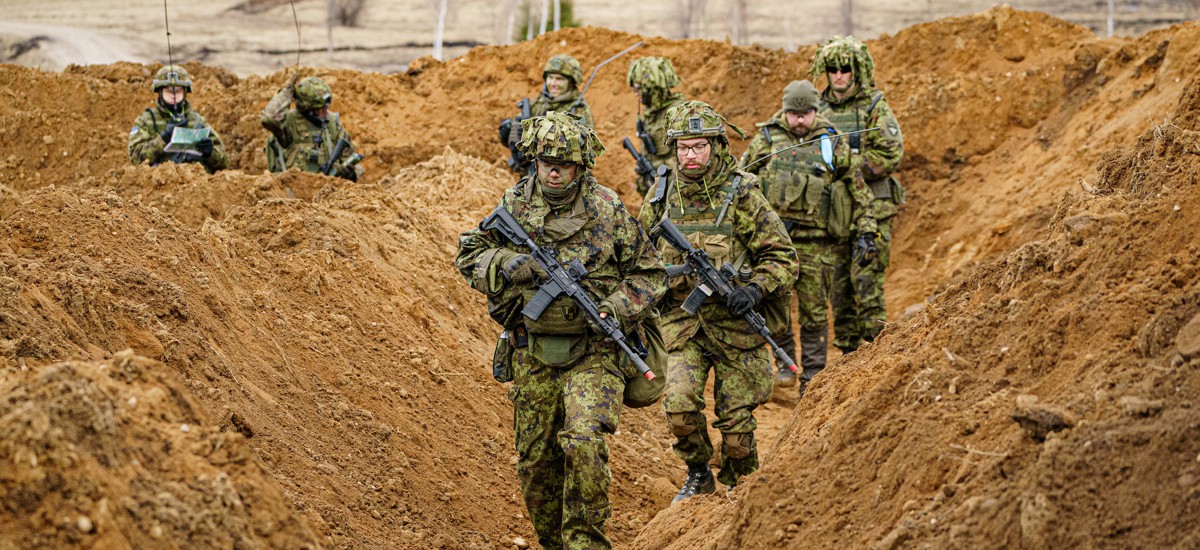
In 2025, Brussels launched ReArm Europe, a central coordination platform designed to align national defence investments and accelerate industrial capacity.
Europe’s defence sector has long suffered from fragmentation—multiple national systems, incompatible equipment, and duplicated procurement. ReArm Europe aims to change that.
Under its umbrella are two key tools:
EDIP (European Defence Industry Programme)
-
€1.5 billion for joint research, development, and production
-
Projects must involve at least three EU countries (or two plus Ukraine)
SAFE (Strategic Armament Financing Envelope)
-
€150 billion EU-level loan facility
-
Enables joint weapons procurement at lower cost and faster speed
Together, these mechanisms encourage countries to pool resources, negotiate better contracts, and ensure new systems can work together seamlessly.
Why the United States Is Pushing Europe Harder Than Ever
Pressure from Washington has intensified.
The U.S. national security strategy published on December 4 described Europe as a weakened partner and reaffirmed an “America First” posture. The document echoed long-standing complaints from former President Donald Trump about European defence spending.
Washington expects Europe to assume most of NATO’s conventional defence responsibilities by 2027—a timeline many European officials privately call unrealistic.
At the 2025 NATO summit in The Hague, allies agreed to aim for 5% of GDP in defence spending by 2035. Most European countries remain well below that threshold.
The strategy also criticised Europe’s migration policies, demographic trends, and regulatory approach, while signalling Washington’s interest in eventually stabilising relations with Russia.
This has fuelled concerns in Brussels that Europe may no longer be able to rely on unconditional U.S. security guarantees.
Europe Pushes Back

European officials responded swiftly.
EU Commissioner Valdis Dombrovskis rejected the U.S. assessment, calling for greater European assertiveness. Council President António Costa and foreign policy chief Kaja Kallas dismissed suggestions that Washington should influence Europe’s internal political choices.
They emphasized a core principle: allies do not interfere in each other’s democratic decisions.
The exchange underscored a growing transatlantic divide—not just over Ukraine, but over Europe’s long-term strategic autonomy.
A Race Against Structural Limits
Despite rising budgets and political momentum, experts warn that money alone will not solve Europe’s defence problem.
Séamus Boland of the European Economic and Social Committee described Europe as an attractive target precisely because of its democratic constraints. EU defence officials acknowledge deep structural challenges: regulatory bottlenecks, slow procurement cycles, and fragmented industrial capacity.
According to Thomas Regnier, spokesperson for EU defence and technology policy, early findings from the Defence Industrial Readiness Survey confirm long-standing problems: delays, incompatible systems, and production limits.
Brussels has begun fast-tracking regulatory reforms, introducing flexible funding rules and simplifying approval processes. But decades of underinvestment cannot be undone overnight.
What Happens Next
Early signs show strong demand. SAFE has already received requests covering nearly 700 projects, with close to €50 billion sought for air defence, ammunition, missiles, drones, and maritime systems. Up to €22.5 billion in pre-financing could be released by early 2026.
Timelines are tight. Europe must modernise its defence industry, sustain support for Ukraine, and respond to increasingly explicit warnings from NATO and Washington.
As EU officials increasingly acknowledge, the central question has changed.
Europe is no longer asking whether it should act—but whether it can act fast enough.
